

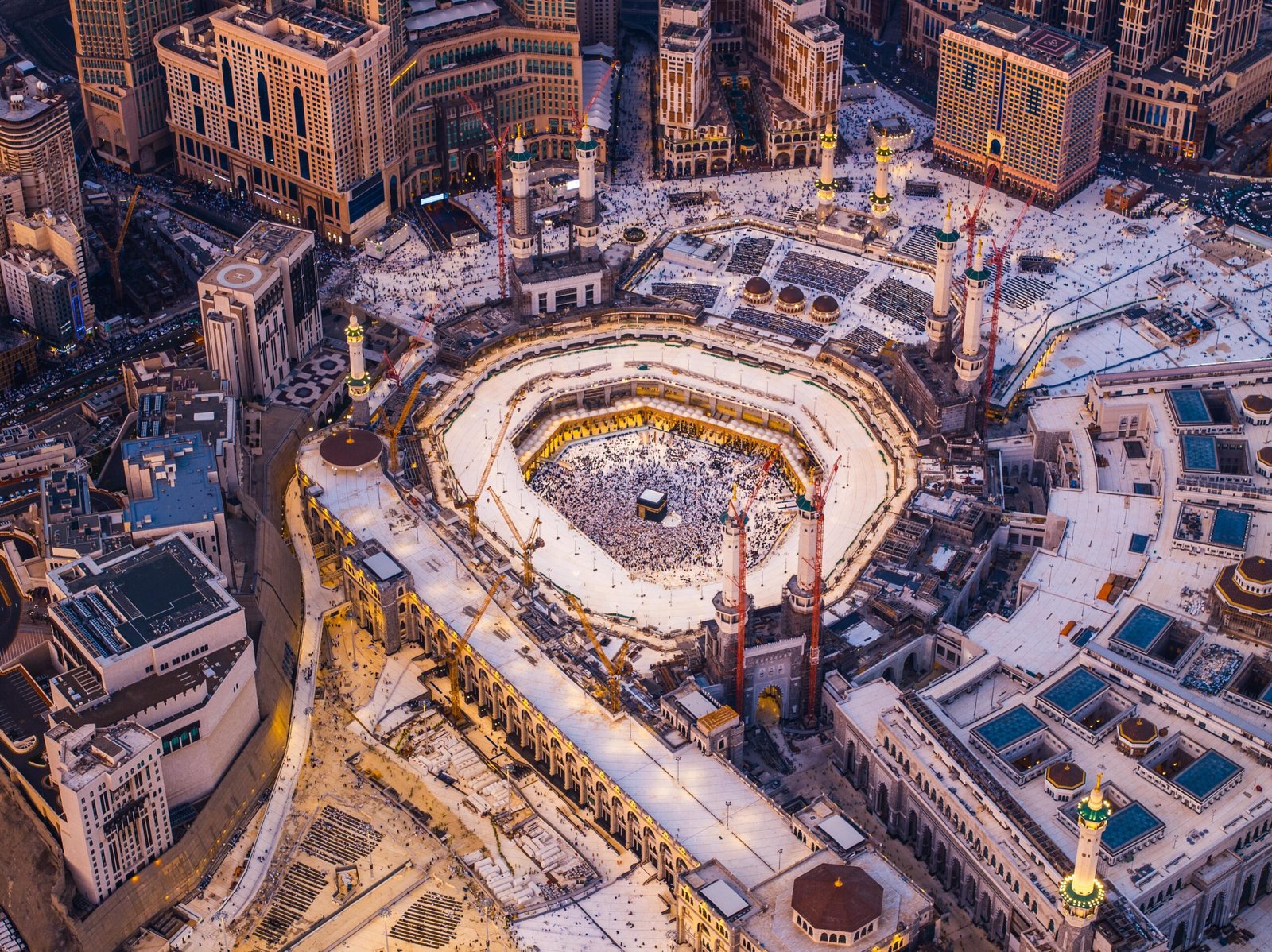
Planning your spiritual pilgrimage can be an overwhelming process, especially if it is your first time. Therefore this Umrah guide was designed for beginners, containing everything about Umrah from what it is and how much history it has to the step-by-step rituals in-hand preparation so as you can get there. Also in other words, how should one describe various types of Umrah packages?
Whether it’s the first time you’re preparing for pilgrimage or if that’s just out of curiosity, this guide is tailored to provide a clear and pragmatic orientation point. you can therefore complete Umrah confidently and with complete peace of mind.
What is Umrah?
Umrah is a sacred Islamic pilgrimage to Makkah that can be performed at any time of year, as opposed to Hajj, of which there are fixed dates.
This is done in a series of rituals involving the spirit and body which includes entering the state of Ihram, performing Tawaf (circling around the Kaaba), Sa’i (walking between Safa and Marwah) and finishing with Halq for men or Taqsir for women (head-hair shaving).
A praiseworthy umrah guide also helps the pilgrim understand every link in these spiritual rituals not only by physical steps but each with its very own internal significance- emphasizing the principles of humility, devotion and submitting completely to Allah. This journey is Lan umrah guide, people even with different skills and ideas will personally feel the difference.
Through Umrah, Muslims seek forgiveness, purification, and rejuvenation of their faith.
A comprehensive Umrah guide is also likely to stress the importance of preparation – both spiritual and practical. Pilgrims are advised to learn the correct duas, to know what order the rites will follow and maintain sincerety in everything they do on their journey. Umrah represents more than mere rituals; it is an experience that makes people patient, disciplined and grateful. By following a clear-cut umrah guide, pilgrims can ensure that their journey is not only according to Islam’s principles but also deeply meaningful and spiritually fulfilling.
Difference Between Umrah and Hajj
The difference in obligation, time, rituals and importance of Islam is the difference between Umrah and Hajj. Hajj is a pillar of Islam and one of the five obligations for every financially and physically able Muslim to take when the time comes at least once in their life. It is only done at a specific time each year in the Islamic month of Dhil-Hijjah. The non-mandatory pilgrimage to Mecca, which you can carry out at any time of the year is known as Umrah. Both of which require pilgrimage to Mecca, such as Tawaf and Sa’i, but Hajj has additional things to do- such as standing at Arafat, staying in Mina and going over to Muzdalifah- that make it more comprehensive physically demanding. Also There are other differences between the two forms of pilgrimage: their length and scale.
Hajj usually lasts for several days with millions of pilgrims gathering simultaneously, all forming one of the biggest religious events ever. On the other hand umrahs are shorter affairs which many Muslims take at leisures and can finish within an hour or two, depending upon time constraints (work load). A well-prepared Umrah guide not only helps pilgrims to see the simplicity and spirit of Umrah, but also the difference with what is both more structured and obligatory at Hajj. Both journeys provide great spiritual rewards, but Hajj imposes a much higher level of obligation as well as ritual complexity on the pilgrim.
History of Umrah
The history of Umrah is as old as that of the Prophet Ibrahim (Abraham) and his son the Prophet Ismail (Ishmael), when the latter was instructed by Allah to build the Kaaba in Makkah as a centre of worship for Unicity. This sacred structure soon became the focus of a whole order activities in which devout men turned to pilgrimage. The rituals for Umrah – such as Tawaf around the Kaaba and Sa’i between the hills of Safa and Marwah – derive from these early events, especially the story of Hajar (Hagar) looking for water her son. These acts have been preserved over time as indispensable components of Islamic unity and devotion, symbolizing faith, perseverance, and reliance on Allah. They also help to bond together the Muslim umma in a common series of rites, for Umrah is open to believers as part of their duties within this world order.
But before Islam came, the object of pilgrimage in Arabian society was perverted by the Quraysh and other tribes, who accepted idolatry and began to perform this ritual at the Kaaba.Only in the time of the Prophet Muhammad was the true meaning of Umrah re-established. A memorable moment in the history of Umrah is the Treaty of Hudaybiyyah, which at first prevented Muslims from performing Umrah but later resulted in its peaceful completion the following year. After the conquest of Makkah, the Kaaba was cleared of idols and Umrah reinstituted as being purely monothestic worship. Since that time millions of Muslims from around the world have kept alive this sacred tradition, following in the footsteps of their forebears and maintaining the same customs across generations.
Step-by-Step Guide to Performing Umrah
1. Ihram (Entering Sacred State)
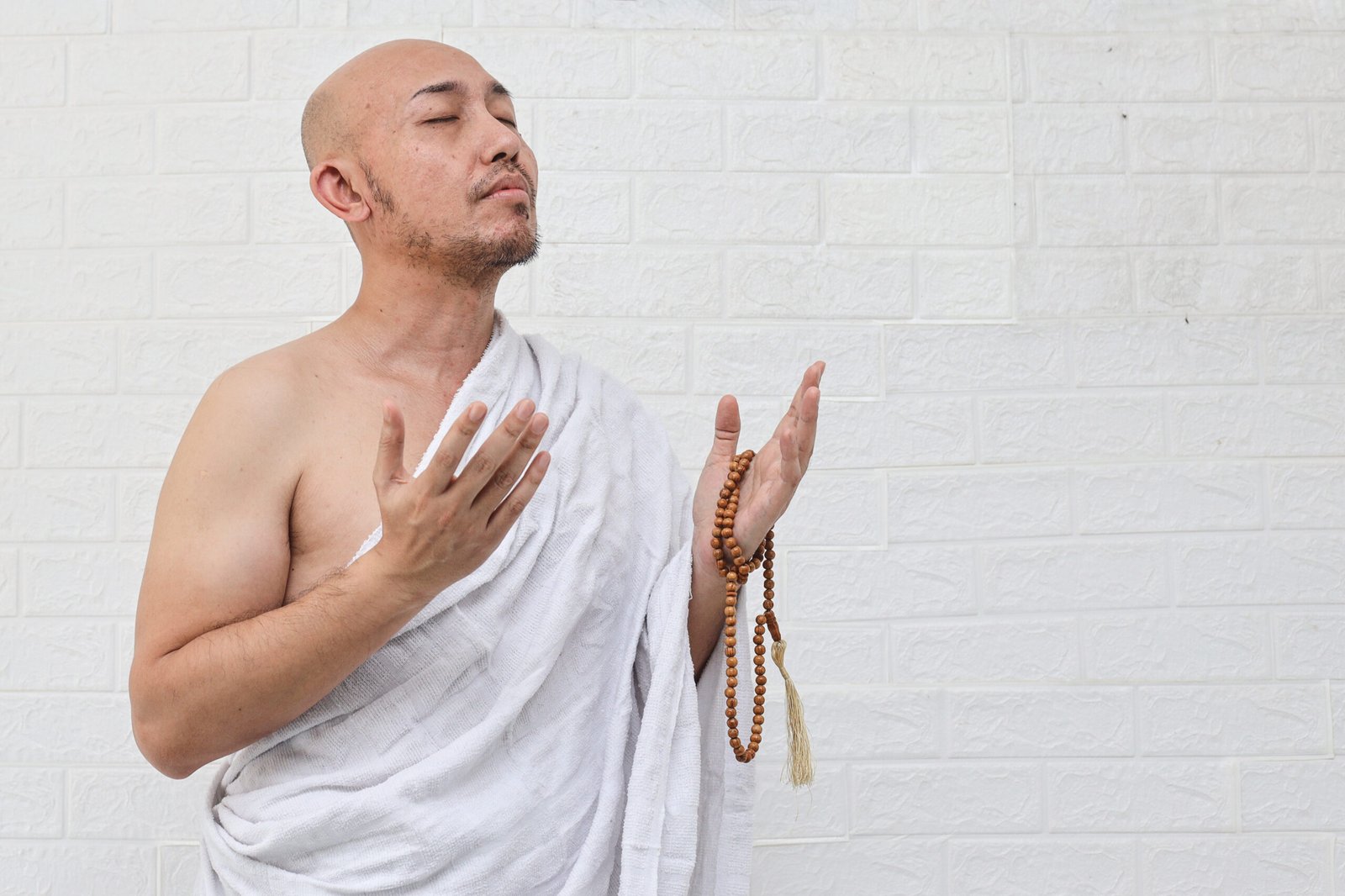
The Ihram is the first and necessary step of making a umrah, and marks the commencement of a pilgrim’s spiritual journey. It is not just putting on clothes, but a sacred state of purity, intention and service to God. Before entering ihram Pilgrims wash themselves, cut their fingernails, and put on humble clothes: two unstitched white sheets for men, symbolizing equality before Allah while women cover their body with modest dress according to Islamic rules specially. At the appointed Miqat stations (intersects), Pilgrims declare the (niyyah&mdasht; intention) for ‘Umrah and start reciting Talbiyah to show they are ready respond call of Allāh.
When they do enter ihram Pilgrims also come under a different set of regulations, which serve to enforce discipline and sharpen spiritual concentration. Pilgrims cannot do things such as cutting their hair or fingernails, applying perfume to the clothes, getting into arguments with other people, or killing anything. Thus these rules help to produce a state of mindfulness and renunciation from external affairs. Ihram also serves as a potent reminder of concord, modesty, submission. It prepares the pilgrim both mentally and spiritually for the sacred rites that are to follow at Mecca.
2. Tawaf (Circling the Kaaba)
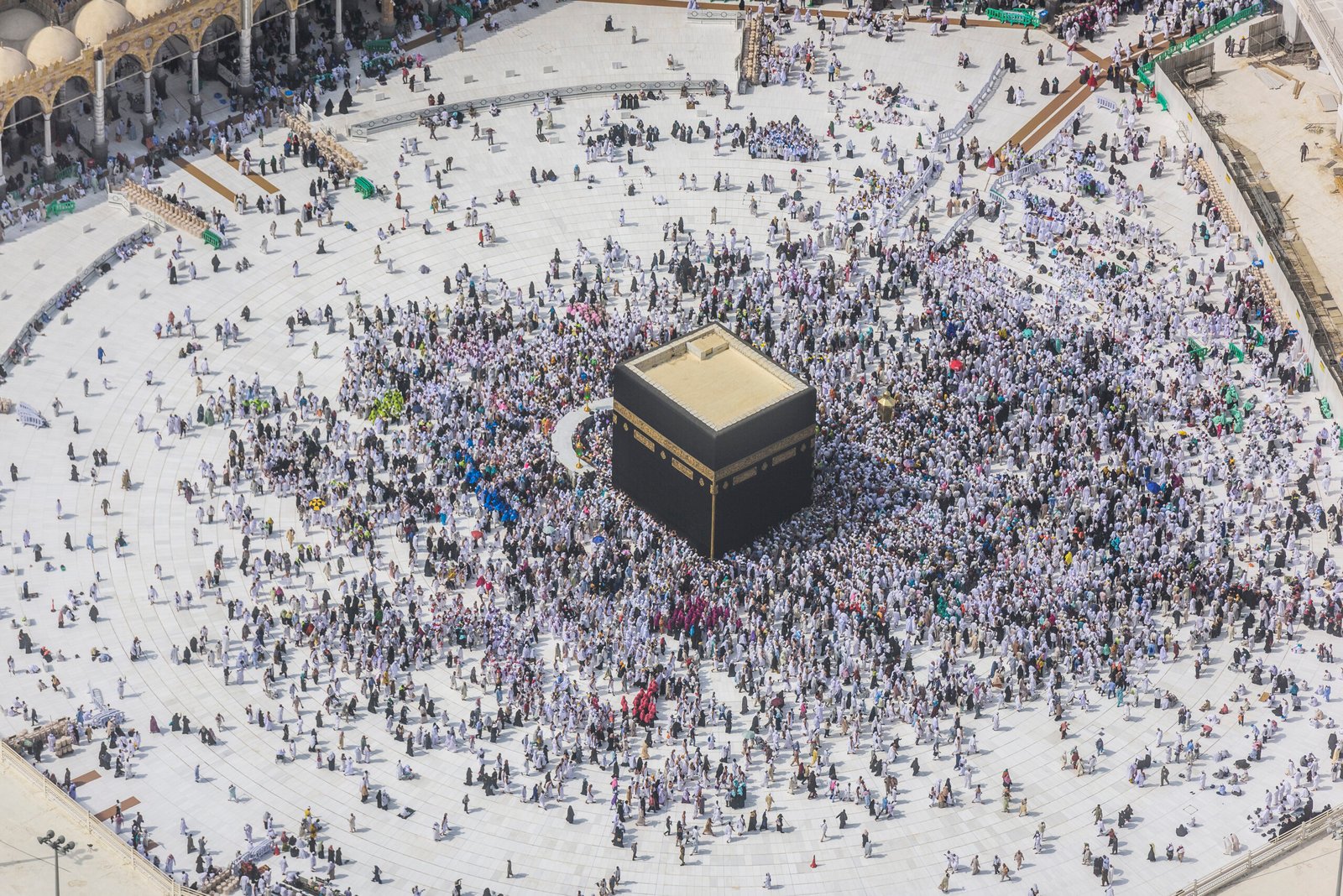
Tawaf is one of the central rituals of Umrah, performed by circling the Kaaba seven times in a counterclockwise direction. This act begins at the Hajar al-Aswad, where pilgrims raise their hands in reverence and say “Bismillah, Allahu Akbar.” If it is easily accessible, one may touch or kiss the Black Stone; however, due to crowds, most pilgrims simply point towards it from a distance (Istilam), which is completely sufficient and recommended in such situations.
Regarding your concern: the presence of fragrance (perfume) on the Black Stone or Kaaba does not invalidate Ihram if touched unintentionally. Scholars clarify that:
- If a pilgrim knowingly applies perfume, it can break the rules of Ihram and may require expiation (dam).
- But if perfume transfers incidentally (like touching the Kaaba or Black Stone), it is excused and does not break Ihram.
During Tawaf, pilgrims engage in supplication (duas), remembrance of Allah (dhikr), and recitation of the Quran. There are no fixed duas required, allowing a personal spiritual connection. Men are encouraged to perform the first three rounds with a slightly brisk walk (Ramal), where possible. Tawaf symbolizes unity, humility, and complete submission to Allah, as millions of believers move in harmony around a single sacred center.
3. Sa’i (Safa and Marwah)
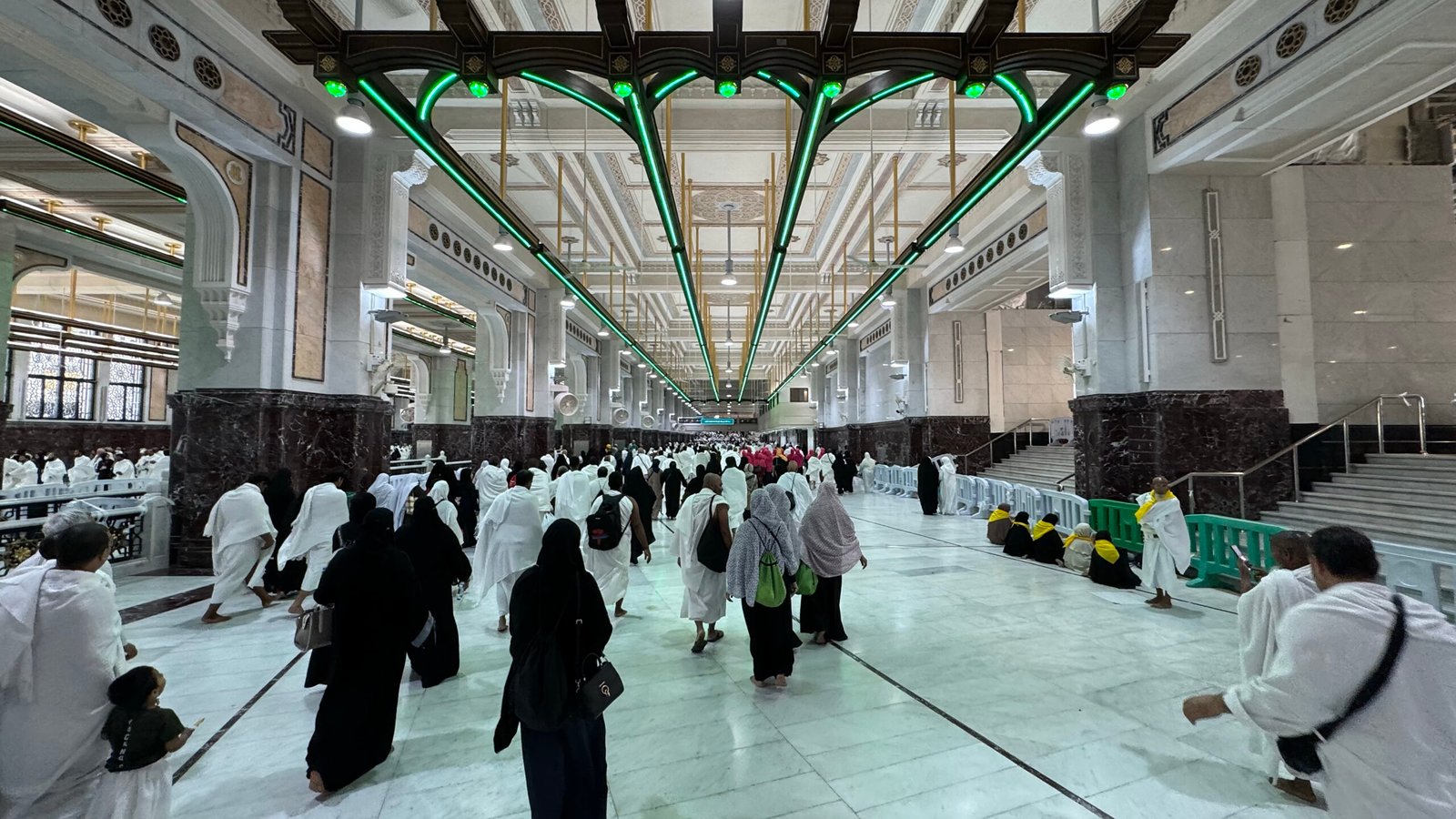
One performs Sa’i, a crucial ritual of UmrahRead more about the seven hills between Safa and Marwah in Masjid al-Haram in Makkah. This is done in memory of Hajar (Hagar), the wife of Prophet Ibrahim (Abraham) who ran between the two hills seeking water for her infant son, Prophet Ismail (Ishmael). The well’s supernatural appearance due to her absolute belief in Allah(swt) represents a profound example of munificent faith, determination and trust in the divine.
The ritual starts at Safa, where the pilgrims would turn towards Kaaba to supplicate and start walking towards Marwah. This cycle is repeated seven times, concluding at Marwah. During Sa’i, men are encouraged to jog between the two green posts in a sign of the urgency of Hajar’s search, while women walk at regular pace. During the worship, pilgrims perform dhikr, duas & contemplation thereby making Sa’i not only a physical act but spiritual activity that strengthens patience, faith in Allah and devotion.
4. Halq or Taqsir (Hair Cutting)
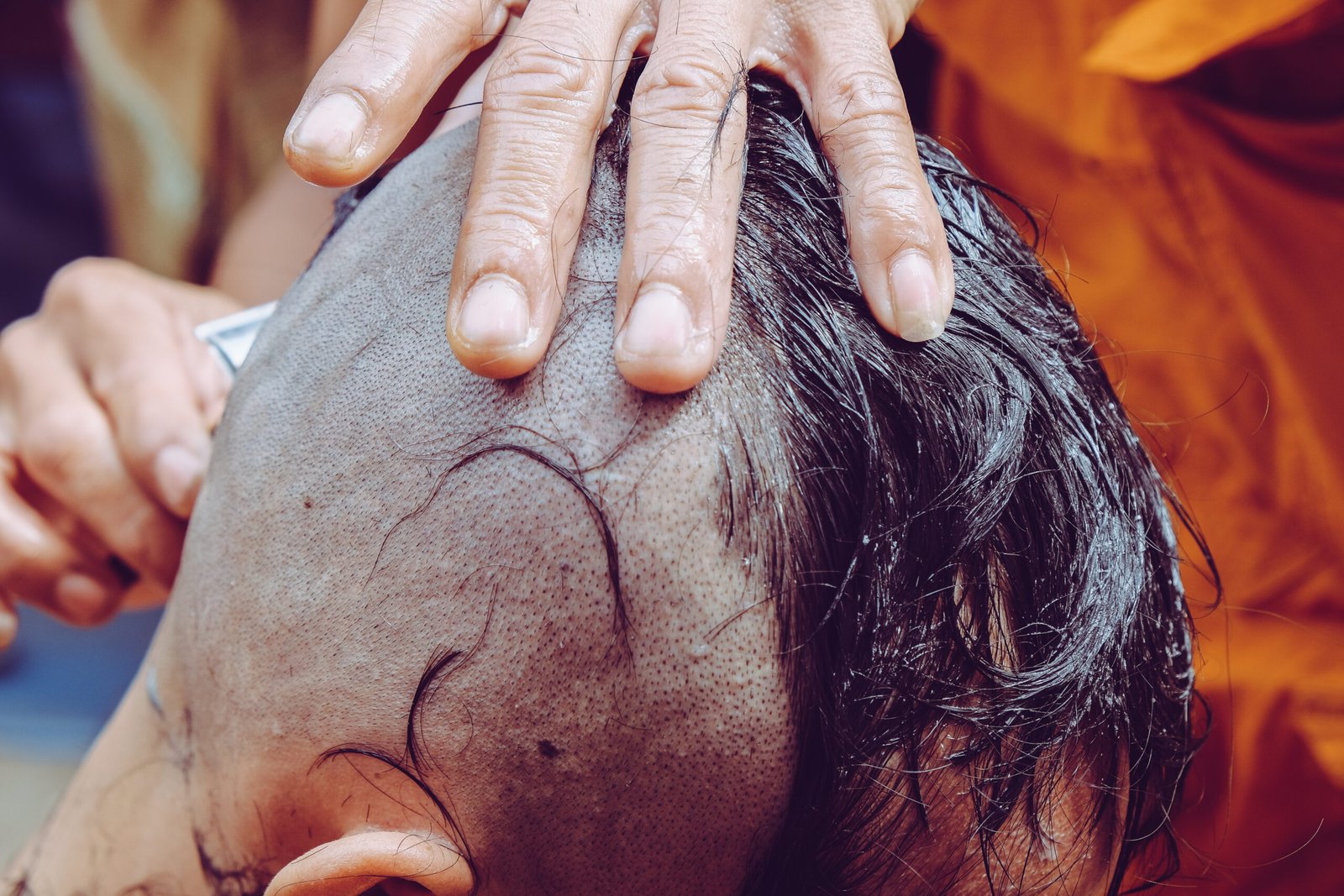
Halq or Taqsir, the final ritual of Umrah, marks the end of pilgrimage. After completing Sa’i, pilgrims either entirely shave their heads (Halq) or trim only a small part of the hair (Taqsir). Shaving the head is considered by men to be more virtuous, as emphasized in various Hadith, but trimming is also permissible. Women, on the other hand, have only to trim a little bit of their hair–from one end to about the length of fingernail. By doing so they not only keep up appearances but are also displaying their humility and submissiveness.
This act represents modesty achieved, a new beginning, and the completion of a holy pilgrimage. Through shaving off hair, pilgrims express their dissociation with the vanities of appearance, as well as their departure from this world in a purified condition. Once Halq or Taqsir has been performed, all constraints of laid down in Ihram are removed and the pilgrim leaves the holy state. This constitutes a valuable climax to Umrah, signifying obedience transformation and spiritual satisfaction.
How Umrah Packages Work?
Umrah packages are designed to make your journey smooth, organized, and completely stress-free, allowing you to focus on your عبادات while all travel and logistical arrangements are handled professionally. These packages typically cover every essential aspect of your pilgrimage to Makkah and Madinah, ensuring convenience, comfort, and peace of mind throughout your journey.
What’s Included in an Umrah Package:
- ✈️ Flights – Return air tickets from your departure city to Saudi Arabia
- 🏨 Hotel Accommodation – Stay in carefully selected hotels in Makkah & Madinah
- 🛂 Visa Processing – Complete handling of your Umrah visa requirements
- 🚐 Transport Services – Airport transfers and intercity travel arrangements
- 🧑🏫 Guidance (Optional) – Religious guidance and support for performing Umrah rituals correctly
Types of Umrah Packages
With these inclusions, Umrah packages provide a structured and reliable way to perform your pilgrimage without the burden of managing individual bookings and arrangements.
Latest Post
March 31, 2026

February 18, 2026